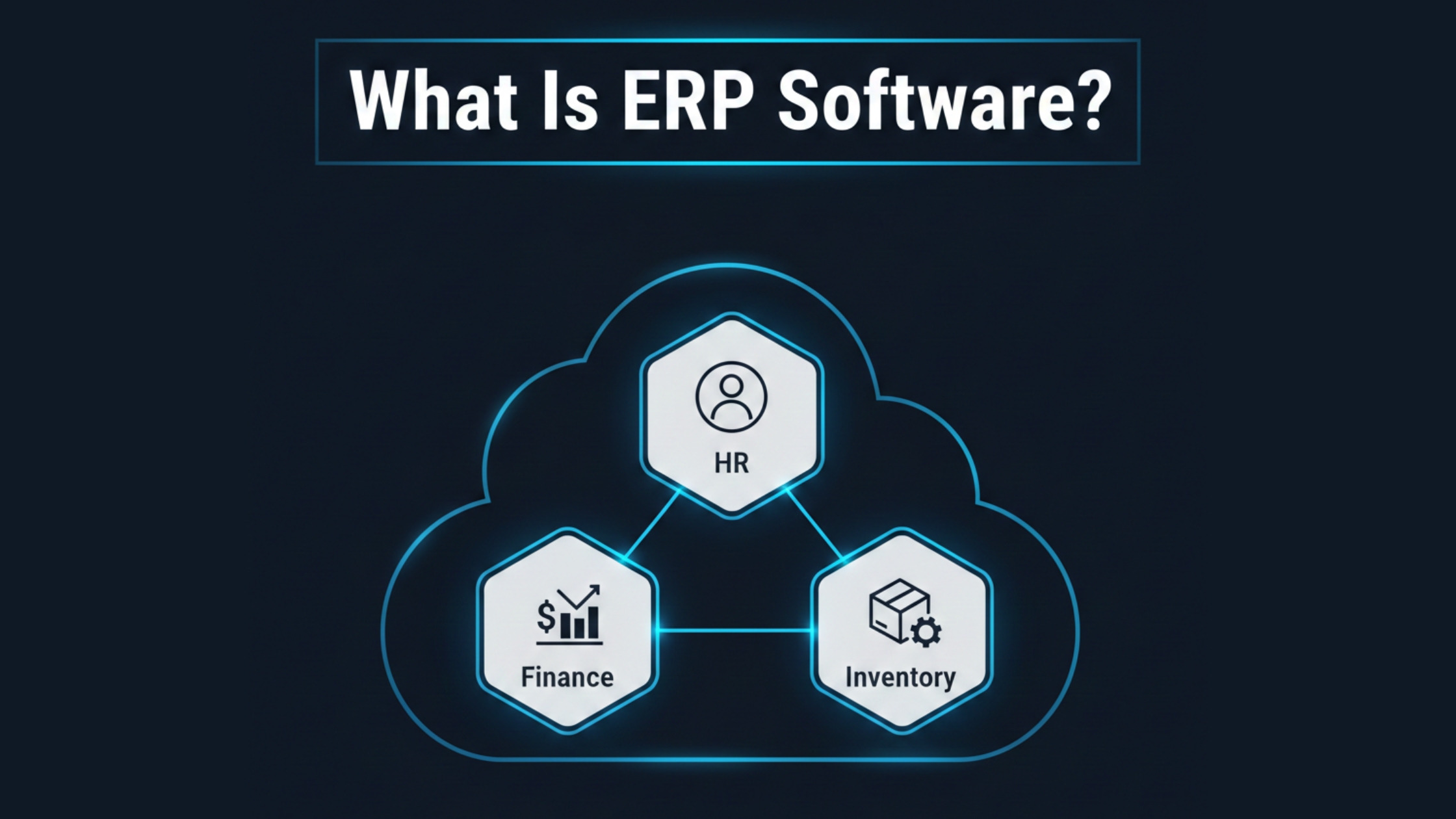
If you've ever had your finance team working in one spreadsheet, your HR team in another, and your inventory managed in a third system that never syncs — you already know the problem ERP software solves.
ERP, or Enterprise Resource Planning software, is a system that brings all of those functions together into a single platform. One database. One source of truth. No more chasing numbers across three apps before you can make a decision.
For businesses in Bangladesh — from garments manufacturers in Gazipur to logistics companies in Chittagong to service firms in Dhaka — ERP is no longer a luxury for multinationals. It is increasingly the operating system for any business that wants to grow without creating operational chaos.
This guide explains what ERP software actually is, what it does, and what you need to know before considering it for your business — without the technical jargon.
What Does ERP Software Actually Mean?
The term 'Enterprise Resource Planning' sounds intimidating. It is not. Here is what it means in plain language:
The 'enterprise' part of the name is misleading. ERP started as a tool for large corporations — but modern cloud-based ERP systems are now designed for businesses of all sizes, including SMEs and startups in Bangladesh.
A practical way to think about it: ERP is the central nervous system of your business. It collects information from every part of your operation and makes it available to everyone who needs it, at the moment they need it.
What Does an ERP System Actually Do?
An ERP system is made up of modules — each module handles one area of your business. The modules share the same underlying database, which is what makes everything stay connected. Here are the most common modules:

Not every business needs every module. A well-implemented ERP starts with what your business actually needs today and grows with you — which is a key reason cloud ERP has become the preferred choice for growing Bangladeshi businesses.
What Problems Does ERP Solve for Bangladeshi Businesses?
Most businesses that start considering ERP are dealing with one or more of these specific problems. The more of these that sound familiar, the stronger the case for ERP:

ERP eliminates these issues by making one version of every record available to everyone who needs it, in real time. That is the operational shift that makes the difference.
What Is the Business Case for ERP? (The Numbers)
A common concern from business owners in Bangladesh is the cost. ERP implementation is not free — so is it worth it? The data is clear.
Sources: DocuClipper ERP Statistics 2025; 6Wresearch Bangladesh Cloud ERP Market Report.
These numbers reflect businesses globally — including manufacturers, service companies, and distributors similar to those operating in Bangladesh today. The ROI case for ERP is not theoretical. It is the result of replacing slow, manual, error-prone processes with systems that run automatically.
What Is the ERP Landscape in Bangladesh Right Now?
Bangladesh's ERP market is growing fast — and the adoption is happening across multiple sectors:
Manufacturing & Garments — the RMG sector is under competitive pressure from countries using automated production systems. Local garments and textile businesses are adopting ERP to manage compliance, production, and supply chain more efficiently.
Retail & Distribution — with e-commerce growing rapidly in Bangladesh, retailers are turning to ERP to manage inventory, orders, and customer data across multiple sales channels.
Finance & Professional Services — accounting firms, consultancies, and financial institutions are adopting ERP to handle regulatory compliance, especially around NBR (National Board of Revenue) requirements.
Logistics & Supply Chain — port-adjacent businesses in Chittagong and Dhaka are using ERP to manage shipment tracking, customs documentation, and warehouse operations.
Locally, businesses can choose from Bangladeshi-built ERP systems (PrismERP, iBOS Managerium, Biznify) as well as global platforms adapted for the local market (Odoo, SAP Business One, Microsoft Dynamics). Each has different price points and implementation requirements.
Cloud ERP vs Traditional ERP — What Is the Difference?
When businesses in Bangladesh consider ERP today, they are almost always choosing between cloud-based and on-premise options. Here is what that distinction means in practice:
For most growing businesses in Bangladesh — particularly those without a large in-house IT team — cloud ERP is the practical choice in 2025.
Is ERP Right for Your Business? A Quick Self-Assessment
ERP is not the right solution for every business at every stage. Here is a quick framework to assess whether your business is ready:
What to Expect When Implementing ERP
One of the most common mistakes Bangladeshi businesses make is treating ERP like installing an app. It is not. ERP is a change to how your business operates — not just a software purchase. Here is what a typical implementation journey looks like:
Needs Assessment — Define which departments will use the system, what problems you are solving, and what your budget range is. This step is critical and often skipped.
Vendor Selection — Evaluate 2–3 ERP providers. Get demos. Ask for references from businesses in your sector in Bangladesh.
Data Migration — Move your existing data (customer records, inventory, financial history) into the new system. This takes time. Plan for it.
Configuration — Set up modules, user roles, approval workflows, and reporting dashboards to match your business processes.
Staff Training — Your team must know how to use the system before go-live. This is non-negotiable.
Go-Live — Roll out the system, usually in phases rather than all at once.
Ongoing Optimisation — ERP is not 'set and forget'. Continuous improvement of workflows and reporting makes the system more valuable over time.
Average implementation timelines range from 2–3 months for basic cloud ERP to 6–12 months for complex enterprise deployments. Realistic expectation-setting before you start is what separates successful ERP projects from expensive failed ones.
Book a free 30-minute ERP readiness call with our team
Frequently Asked Questions About ERP Software
Q: What is ERP software in simple terms?
A: ERP (Enterprise Resource Planning) software is a business management system that connects your company's core functions — finance, HR, inventory, sales, and procurement — into one platform. Instead of data living in separate spreadsheets or disconnected apps, ERP gives every department access to the same real-time information.
Q: Is ERP software suitable for small businesses in Bangladesh?
A: Yes. Modern cloud-based ERP systems are designed for businesses of all sizes. Many ERP platforms now offer modular pricing, meaning you only pay for the functions you actually use. Businesses in Bangladesh with 10 or more employees across multiple departments typically benefit from ERP adoption.
Q: How much does ERP software cost in Bangladesh?
A: Pricing varies significantly. Locally-built cloud ERP solutions in Bangladesh start from approximately ৳10,000–৳20,000 per year for basic versions. International platforms like Odoo or Microsoft Dynamics 365 are priced higher but offer more features and global support. Implementation costs — setup, training, migration — are separate from licence fees and should be factored into your total budget.
Q: How long does ERP implementation take?
A: A basic cloud ERP deployment for an SME typically takes 2–4 months from contract signing to go-live. More complex enterprise implementations, involving multiple departments and significant data migration, can take 6–12 months. Rushing implementation is the leading cause of ERP project failure.
Q: What is the difference between ERP and accounting software?
A: Accounting software manages only financial transactions — invoicing, expenses, bookkeeping. ERP includes accounting as one module but also covers HR, inventory, procurement, sales, and supply chain. ERP connects all these functions in one system. If your business only needs financial management, accounting software is sufficient. If you need to manage operations across departments, ERP is the appropriate tool.
Q: Which ERP is best for manufacturing companies in Bangladesh?
A: Manufacturing businesses in Bangladesh commonly use PrismERP, iBOS Managerium, Odoo, and SAP Business One for production, inventory, and compliance management. The right choice depends on your production volume, compliance requirements (especially for garments/RMG), and budget. A needs assessment before vendor selection is strongly recommended.
Q: Can ERP software work for businesses outside Bangladesh?
A: Yes. Cloud ERP systems are designed to work across multiple locations, currencies, and regulatory environments. Bangladeshi businesses with operations in the GCC, UK, or North America can run a single ERP instance that handles multi-currency accounting, multi-jurisdiction compliance, and remote access from any country.
Or speak directly with our team about ERP options for your business:
→ Book a Free ERP Consultation with CodeMoly