That is not a resource problem. It is a systems problem. And it is exactly the problem that business automation solves.
Bangladesh's startup scene is growing. Tracxn data puts the number of active startups in the country at over 11,000, with companies like bKash, Pathao, Chaldal, and ShopUp showing the world that world-class consumer platforms can be built from Dhaka. But for every bKash, there are thousands of startups still running entirely on manual processes — burning their team's time on tasks that software can handle automatically.
This post is about the shift that is already happening, why it matters for startups in Dhaka specifically, and what the practical starting point looks like for founders who want to automate without hiring a tech team.
What Is Business Automation, Really?
Business automation is not a new concept — factories have been automating physical tasks for decades. What is new is that software automation is now accessible to any startup with an internet connection and basic tools.
In plain terms: business automation is using software to perform tasks that your team currently does manually — responding to customer messages, creating records, sending reminders, generating reports, or moving data between systems.

The simplest automation in any Dhaka startup might look like this: when a customer sends 'I want to order' on WhatsApp, a bot immediately replies with your product list, captures their selection, creates a record in your CRM, and triggers an invoice — all without anyone on your team touching it.
That is not science fiction. Startups in Dhaka are running these workflows today using tools that cost less per month than a lunch at Bashundhara City.
Why This Matters Specifically for Dhaka Startups
Dhaka has a unique startup operating environment that makes automation not just useful — but almost necessary for survival at scale:
Bangladesh's IT sector is expected to reach $2.11 billion by 2025 and generates over 5,000 IT graduates annually. The talent is here. The infrastructure is improving. The tools exist. The question is whether founders choose to use them.
What Are Dhaka Startups Actually Automating Right Now?
Across the startup ecosystem in Bangladesh, the most common automation use cases — the ones delivering the fastest ROI — fall into five categories:

1. Customer Communication Automation
The most immediate time-saver. WhatsApp Business API, Facebook Messenger bots, and AI-powered chatbots handle first-response messages, FAQs, order confirmations, and delivery updates. For an e-commerce startup in Dhaka handling 100+ daily WhatsApp messages, this alone can save 3–5 staff hours every day.
2. Invoice and Payment Automation
Manually generating invoices, tracking payment status, and sending reminders is one of the highest-cost manual workflows in Bangladeshi startups. Automated invoicing tools generate, send, and follow up on invoices triggered by events like order completion or project milestones — without anyone pressing a button. Research shows automation reduces invoice processing time by up to 75%.
3. CRM and Lead Management
When a potential client fills out a form on your website, that lead should immediately appear in your CRM, trigger a welcome email, get assigned to a salesperson, and be scheduled for a follow-up call — automatically. Most Dhaka startups still do this manually, losing leads in the process.
4. Reporting and Data Dashboards
Founders and managers in Dhaka typically spend 3–6 hours per week pulling numbers from multiple sources to build weekly reports. Connected automation tools turn this into a live dashboard that updates in real time. The founder checks one screen, not seven spreadsheets.
5. HR and Onboarding Workflows
Onboarding a new employee means creating accounts, assigning tools, sending contracts, and completing compliance paperwork. HR automation handles all of this through pre-built workflows triggered when a hire is confirmed. HR automation globally has grown 599% in recent years — the productivity gains are real and measurable.
The Numbers: What Does Automation Actually Return?
For founders in Dhaka, the business case for automation needs to pass a practical test: is the cost justified? The data says yes — and faster than most founders expect.
Sources: Symtrax via ARDEM (2025); Vena Solutions Business Automation Statistics 2025.
Put this in Dhaka context: a startup spending 15 staff-hours per week on manual tasks that cost ৳500 per hour is burning ৳390,000 annually on work that automation could handle for a fraction of that cost. The ROI calculation is straightforward once you measure the current cost honestly.
Which Automation Tools Are Dhaka Startups Using?
You do not need an in-house engineering team to automate. The tools below are used by startups across Dhaka — many requiring zero coding knowledge:

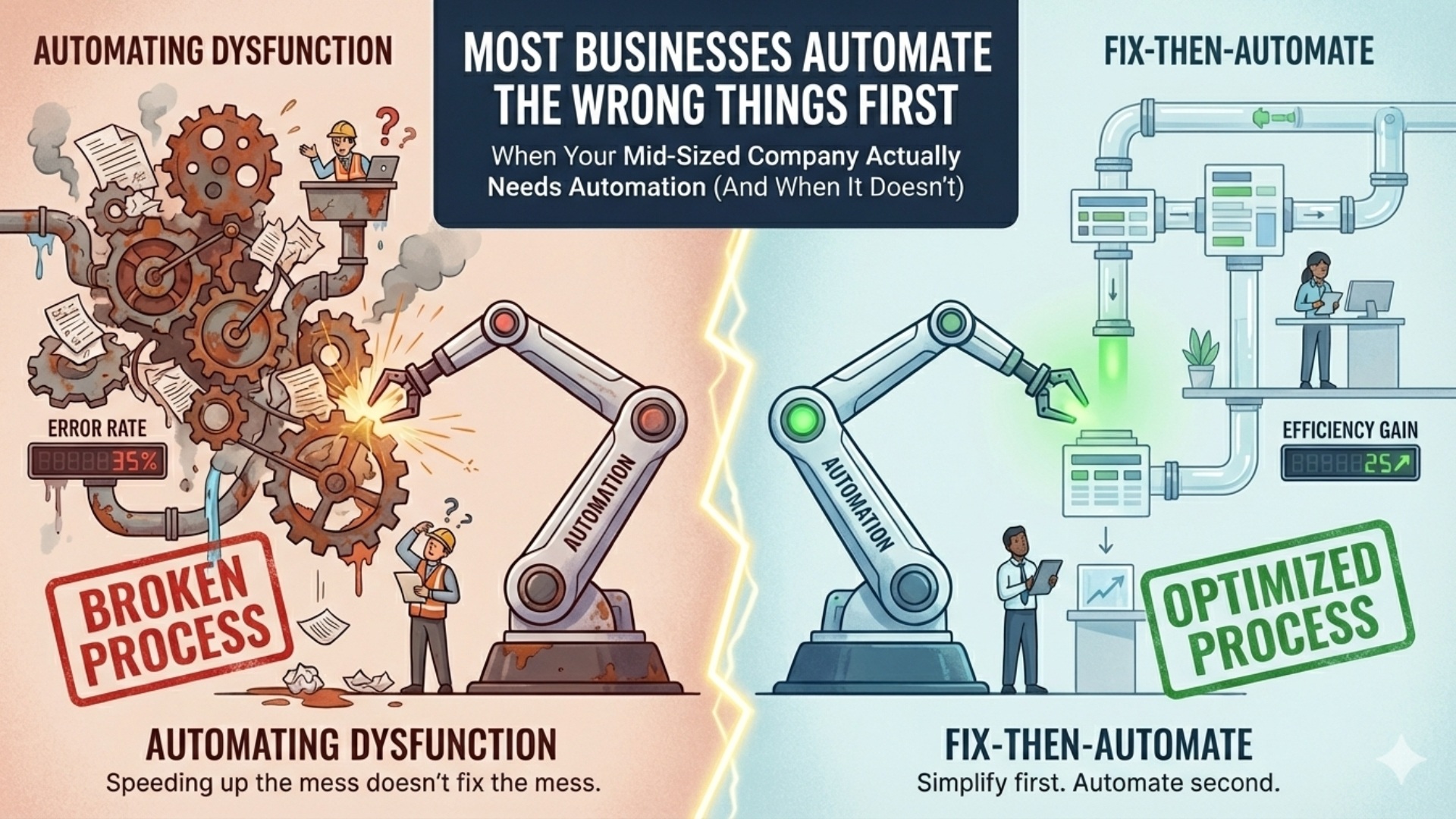
The starting point does not have to be expensive or complex. Most founders who see the greatest early returns begin by automating one high-volume, repetitive process — usually customer response or invoicing — and expand from there.
The Automation Maturity Ladder for Dhaka Startups
Automation is not binary — it is a spectrum. Here is how startups in Dhaka typically progress:
Most Dhaka startups sit at Stage 1 or early Stage 2. The jump from Stage 1 to Stage 2 is the most impactful — and can be done in a week with the right tool and process clarity.
The Three Biggest Automation Mistakes Dhaka Startups Make
Knowing what to avoid is as important as knowing where to start. These patterns show up consistently:
Where Should Your Startup Start?
The best first automation for most Dhaka startups is whichever one answers 'yes' to all three of these questions:
Is this task done repeatedly, at least 3–5 times per week?
Does the task follow a clear, predictable pattern every time?
Does completing this task prevent someone on your team from doing higher-value work?
If yes to all three, that is your starting point. Common first automations for Dhaka startups include: WhatsApp auto-reply for business hours, Google Form submission → CRM record creation, and invoice generation triggered by order confirmation.
Ready to Find Out What You Can Automate First?
CodeMoly works with startups and growing businesses across Bangladesh to identify their highest-impact automation opportunities and build the workflows that deliver real ROI — without overselling complexity they don't need
→ .Book a free 30-minute automation audit with our team.
Frequently Asked Questions About Business Automation in Dhaka
Q: What is business automation in simple terms?
A: Business automation is using software to perform tasks that your team currently does manually — like responding to customer messages, generating invoices, updating records, or sending reports. Instead of a person doing these steps each time, the software handles them automatically when triggered by a specific event.
Q: Is business automation suitable for small startups in Dhaka?
A: Yes. Many automation tools have free tiers or low monthly costs that are accessible to early-stage startups. A startup with just 3–5 people can automate customer responses, invoicing, and CRM updates without needing a technical team. The key is starting with one high-volume, repetitive process rather than trying to automate everything at once.
Q: How much does business automation cost in Bangladesh?
A: Entry-level automation tools (Zapier free tier, n8n self-hosted, WhatsApp Business App) have no monthly cost. Paid tiers for tools like Zapier, HubSpot, or n8n start from around $20–50 per month. Custom automation built on API integrations or enterprise workflow tools cost more — typically from ৳50,000 upward for a custom implementation. The ROI on even modest automation spend is well-documented: most businesses recoup their investment within 6–9 months.
Q: What is the difference between business automation and artificial intelligence?
A: Business automation handles rule-based, predictable tasks: if X happens, do Y. AI adds a layer of decision-making to automation — it can handle variable inputs, classify information, and respond differently based on context. In practice, most Dhaka startups benefit most from basic rule-based automation first. AI-powered automation becomes valuable once the foundational workflows are already running.
Q: Which business processes should a Dhaka startup automate first?
A: Start with the process that consumes the most time and follows the most predictable pattern. For most Dhaka startups, this is one of: customer response via WhatsApp, invoice generation, CRM lead capture from forms, or weekly reporting. Pick one, automate it well, measure the time saved, then move to the next.
Q: Do I need a technical team to implement business automation?
A: Not for basic automation. No-code tools like Zapier, n8n, and Make (formerly Integromat) are designed for non-technical users. Many startup founders set up their first automations in hours, not weeks. For more complex workflows — custom API integrations, AI-powered systems, or enterprise-grade automation — working with a technology partner like CodeMoly accelerates implementation significantly.
Q: How does business automation connect with ERP systems?
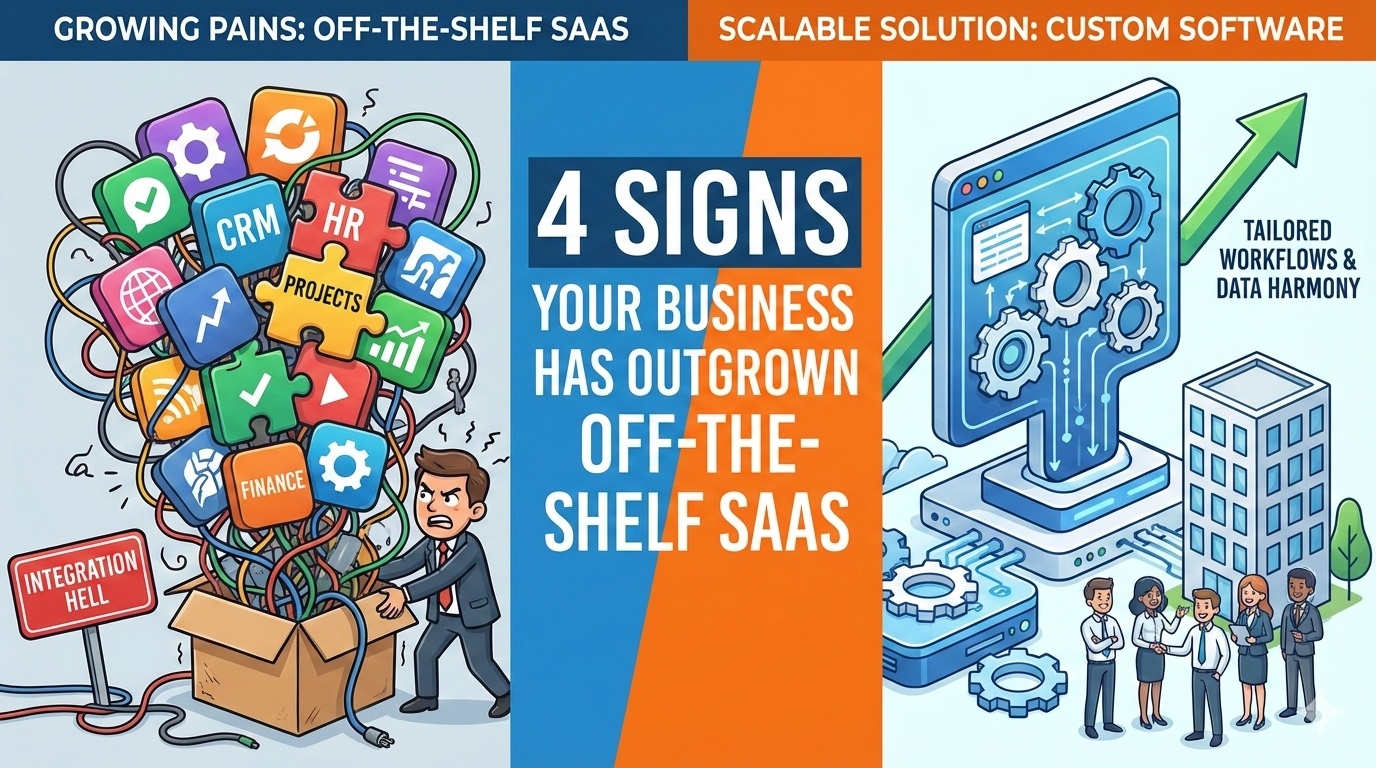
A: ERP (Enterprise Resource Planning) software is effectively a sophisticated, integrated automation platform for your entire business — covering finance, HR, inventory, and sales in one system. Standalone automation tools like Zapier or n8n are the entry point. As a business grows, ERP becomes the natural progression — it replaces multiple disconnected automations with a single integrated system. Many startups begin with no-code automation and migrate to ERP as they scale.
What to Read Next
These posts will help you take the next step beyond this overview:
5 Signs Your Business Has Outgrown Manual Processes (And What to Do Next)
Or talk to our team directly about automation for your business:
→ Book a Free Automation Audit with CodeMoly